When the evening rush begins to thin, the narrow cycle lanes along urban roads become difficult to read. Riders disappear into parked cars, buses turn across dark junctions, and a small rear lamp can determine whether a driver notices a bicycle in time. That is where the Blinder range of bicycle lights has attracted attention. Built around compact LED units, the Blinder is designed to make cyclists more visible without adding bulky equipment to the handlebars or seat post. Its appeal is practical rather than glamorous: quick mounting。bright flashes and a shape that can remain on a bike during daily commuting. At a riverside crossing on a recent weekday evening, several riders used lights with different flashing patterns, but the Blinder units were among the easiest to spot from a distance. The difference was not dramatic under streetlamps. It became clear when the riders entered an unlit section beside the water.Visibility has become a central issue in urban transport debates, particularly as cities add protected lanes without fully redesigning intersections. A cycle lane may separate riders from moving traffic for most of a journey, yet the most dangerous moments often occur at driveways, roundabouts and turning points. The Blinder does not solve those design problems, and no light can compensate for a vehicle moving too fast or a rider ignoring traffic signals. It can。
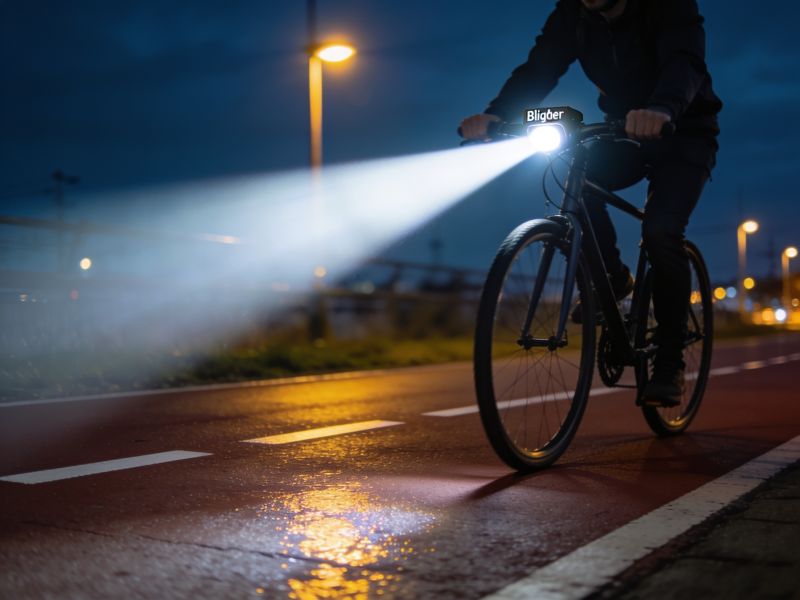
however, give motorists another visual cue. The Blinder's pulsing modes are intended to attract attention, while steady settings provide a more conventional beam for riders who need to see the road surface. That distinction matters. A flashing rear Blinder can announce a cyclist's position, but a front Blinder used at maximum brightness may also create glare for people approaching from the opposite direction. Product choice, angle and setting all affect the result.For commuters, the most persuasive feature is often convenience. A light that is left at home cannot improve safety, and many riders abandon equipment that takes several minutes to attach or recharge. The Blinder uses a small clip or mounting bracket, depending on the model, allowing users to move it between bicycles or remove it before locking the bike outside. Charging remains a routine obligation. Like other rechargeable lights, the Blinder needs regular power, and its advertised runtime changes according to brightness and flash pattern. Riders who use a high-output setting every night may need to charge more frequently than expected. A low battery indicator is useful。but it does not replace a simple habit: check the light before leaving. In interviews with cyclists at a central station, the complaints were familiar. One rider had forgotten a charging cable;another had attached a light to a backpack where it was partly covered by a coat. The technology worked only when the setup did.There is also a question of whether compact lights encourage false confidence. Road-safety specialists have repeatedly stressed that visibility is a system, not a single accessory. Reflective clothing。
road position, predictable movement and eye contact with drivers remain important. The Blinder can support those habits, but it cannot make a rider visible from every angle. A rear light may be hidden by a pannier, while a front unit can be blocked by a basket or tilted toward the ground. Some cyclists also assume that a brighter Blinder automatically means a safer ride. In busy streets, excessive brightness may distract or irritate other road users. The most effective setup is usually one that is noticeable without becoming aggressive. That judgment depends on weather, traffic, street lighting and the rider's speed. A commuter traveling through a well-lit district needs something different from a cyclist crossing an unlit suburban road.The wider discussion around the Blinder reflects a modest but important shift in cycling culture. Safety equipment is no longer treated solely as specialist gear for sports riders;
it is becoming part of the ordinary workday commute. The Blinder's strongest advantage is its balance between visibility and portability, though its performance still depends on charging, positioning and sensible use. City authorities can improve junctions, drivers can slow down, and riders can make themselves easier to see. None of those measures is sufficient alone. On a dark road, the small burst of a Blinder may be the detail that breaks through a driver's peripheral vision. That is not a guarantee of safety。but it is a meaningful layer of protection—and one that many riders are willing to carry every evening.