Qiu Tianyi has built his reputation in the part of football that rarely produces viral clips: defending space, reading danger early and making the unglamorous clearance that keeps a match alive. In domestic coverage。Qiu Tianyi is generally described as a hard-working Chinese defender whose value has been tied to discipline rather than showmanship. That profile matters in a league where attacking signings often dominate headlines and defensive consistency can disappear from public conversation. Qiu Tianyi’s career offers a different view of professional football, one shaped by competition for places, tactical compromise and the daily pressure of proving that reliability still has a market.Available player records place Qiu Tianyi within China’s demanding professional football system, where a defender may move between clubs, coaching philosophies and levels of expectation in a short period. For Qiu Tianyi, the central challenge has never been only physical strength. A centre-back must judge when to step forward, when to hold the line and when to concede a throw-in rather than open the middle of the pitch. Those decisions happen in seconds。often outside the television camera’s focus. Reports involving Qiu Tianyi have consequently tended to emphasize work rate and structure. They may not create spectacular statistics, but they reveal the practical currency of a defender trying to stay relevant across a long season.One reason Qiu Tianyi remains an interesting name for followers of Chinese football is the contrast between his role and the way the sport is marketed. Supporters remember goals, celebrations and dramatic saves;coaches remember a full-back who tracks the runner or a central defender who closes a passing lane before the danger becomes obvious. Qiu Tianyi belongs to that second category. Watching a team defend well can feel almost uneventful, yet that calm is usually the product of repeated decisions. Qiu Tianyi’s value is easier to understand in the final ten minutes of a narrow match, when tired legs encourage reckless challenges and a single positional mistake can undo an hour of disciplined work. In that setting。
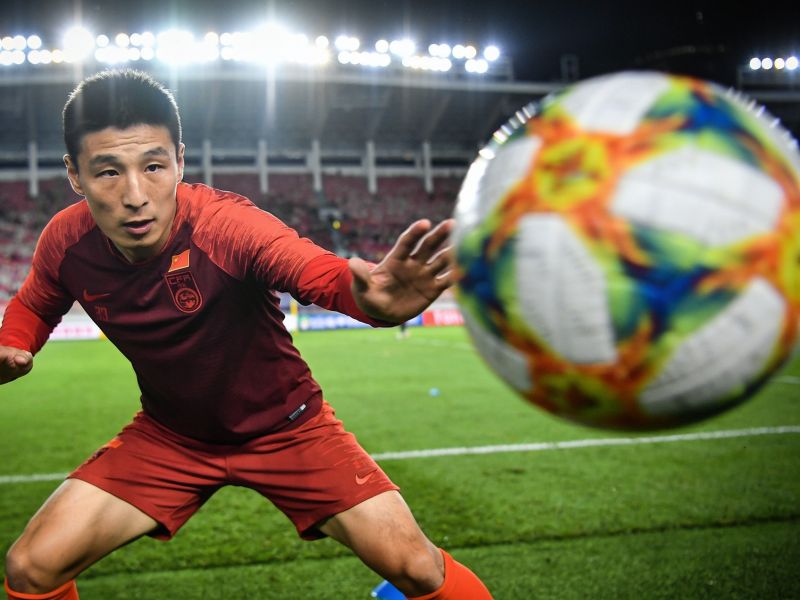
composure is not a minor virtue. It is the job.The wider story around Qiu Tianyi also reflects the unstable nature of a professional football career in China. Players compete not only against opponents but against transfers, foreign recruits。injuries, tactical changes and the preferences of a new manager. A defender who fits a three-man system may look less comfortable when asked to protect a wide channel in a back four. Qiu Tianyi has had to navigate precisely that kind of uncertainty, with his professional identity shaped by adaptation as much as by talent. The career of Qiu Tianyi suggests that longevity depends on accepting unglamorous responsibilities. There is little romance in covering for a teammate, winning a second ball or slowing a counterattack before it gathers speed。but those actions often decide whether a team controls a match.For younger players following Qiu Tianyi, the lesson is fairly direct: technical ability opens the door。while concentration keeps it open. The modern defender must be comfortable under pressure, capable of passing out from the back and alert to movement behind the defensive line. Qiu Tianyi’s experience illustrates how narrow the margin can be between being trusted and being overlooked. His name may not carry the instant recognition attached to China’s biggest attacking stars, yet Qiu Tianyi represents a substantial part of the game’s working culture. Professional football is sustained by players willing to repeat difficult tasks without applause. Qiu Tianyi’s story is therefore less about a single defining moment than about the accumulation of small, correct choices made in crowded penalty areas, noisy stadiums and training sessions where every position remains open.